
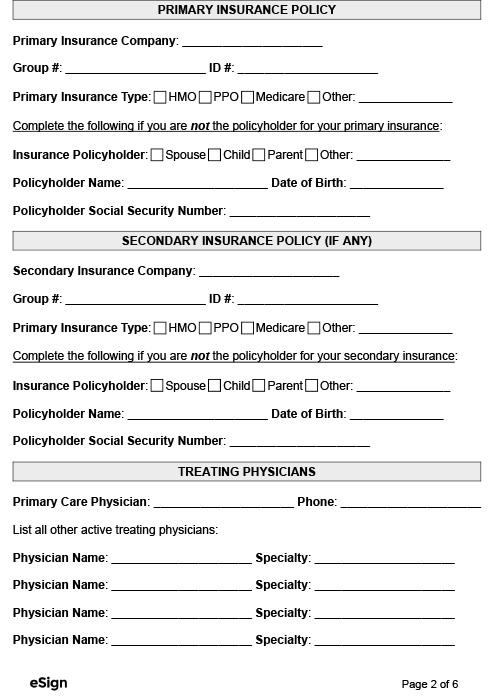
This client asked me to collect data from their patients before they arrived at the clinic. They used a paper questionnaire with general questions, which were answered during the first visit, taking time away from the actual consultation to compile this medical history for each new patient.
They wanted to implement a form with more than 100 questions to improve the level of detail of the information obtained.
Since this is a small system, with the technology to be used already established by the client, I proceeded to organize the content and flow to ensure the patient’s safety. I organized the steps as follows:
- Appointment information: including date and time, selection of the doctor and the main reason for the consultation
- Personal information
and contact information - Health insurance or payment information
Then the in-depth health questionnaire begins.
The data requested depends on the reason for the initial consultation.
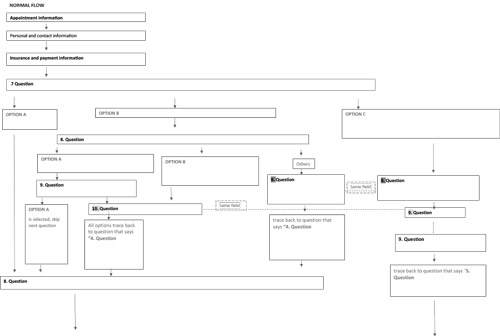
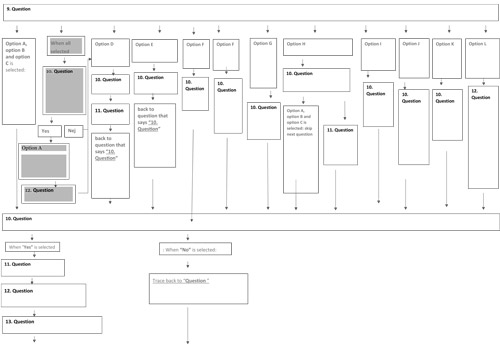
The next step was to translate the paper questionnaire into a graphical flow of questions, allowing for the addition of logic when additional information was required. This step is validated with the client to determine if the logic was working correctly, as it requires specialized medical knowledge to understand the relationships between the different questions.
I then built the form within the WordPress site using the plugin the client was already using. It was decided to keep all the questions on the same screen to validate the correct flow of questions. The necessary design elements and adjustments were also added, saving time.
In the final stage, each question was separated into a separate screen to achieve a clear flow and avoid patient overwhelm while filling out the form. It was also decided to remove the progress bar. As a future improvement, it was proposed to save partial data and allow the patient to continue the questionnaire at a later time.
The implementation of the system allows the patient to arrive at the appointment with a complete medical history, and the physician can review that history and focus the consultation time on updates, questions, and new treatment approaches instead of completing information that they later don’t have time to review. This makes the visit more efficient, allowing the patient to leave with appropriate answers and prescriptions, if necessary. It allows the physician to review the data before starting the appointment, reflect, order additional studies, or simply provide instructions that allow for a personalized resolution of the reason for the consultation without wasting valuable consultation time collecting data. In all cases, the physician corroborates the data with the patient during the first visit, but this takes much less time.